
Vegan Bali: The Essential Guide 2026

Bali isn’t just friendly to vegans. It’s one of the most vegan-dense destinations on Earth. With over 200 plant-based restaurants across the island and a cuisine that was already heavily plant-based before the word “vegan” existed, the island offers something rare: a place where vegan travelers do not have to compromise, explain, or settle for side dishes. 

Why Bali is a Vegan Paradise

Three forces created this:

  1. Hinduism and Ahimsa
    Bali is the only Hindu-majority province in Indonesia, a Muslim-majority nation. Hinduism’s principle of ahimsa (non-violence) promotes respect for all living beings. While not all Balinese are vegetarian, the cultural foundation means vegetable-forward cooking is normal, not an alternative. Cows are sacred, so beef is rare. Temple offerings are vegetarian by default. And many traditional dishes like gado gado, urap urap, and sayur lodeh, are naturally vegan or easily adapted.
  2. The Wellness Tourism Boom
    The post-Eat, Pray, Love era transformed Bali into a global wellness hub. Yoga retreats, detox centers, and holistic health practices exploded. Plant-based eating quickly followed. The Bali Spirit Festival alone draws over 6,000 attendees annually, many staying for weeks or months, creating sustained demand for vegan infrastructure. By 2026, Ubud and Canggu have become the vegan capitals of Southeast Asia. 
  3. Entrepreneurial Expatriates
    A large, long-term expat community — many from Australia, Europe, and North America — partnered with local chefs and farmers to open vegan cafes, organic farms, and plant-based cooking schools. Together, they’ve elevated humble Balinese staples like tempeh and jackfruit into dishes that wouldn’t look out of place on a fine-dining menu.

The result: you can find vegan warungs (local eateries), raw food retreats, and plant-based fine dining within a 10-minute scooter ride almost anywhere on the island. 

How to Eat Vegan in Bali — A Practical Guide

Understanding the Local Food Landscape
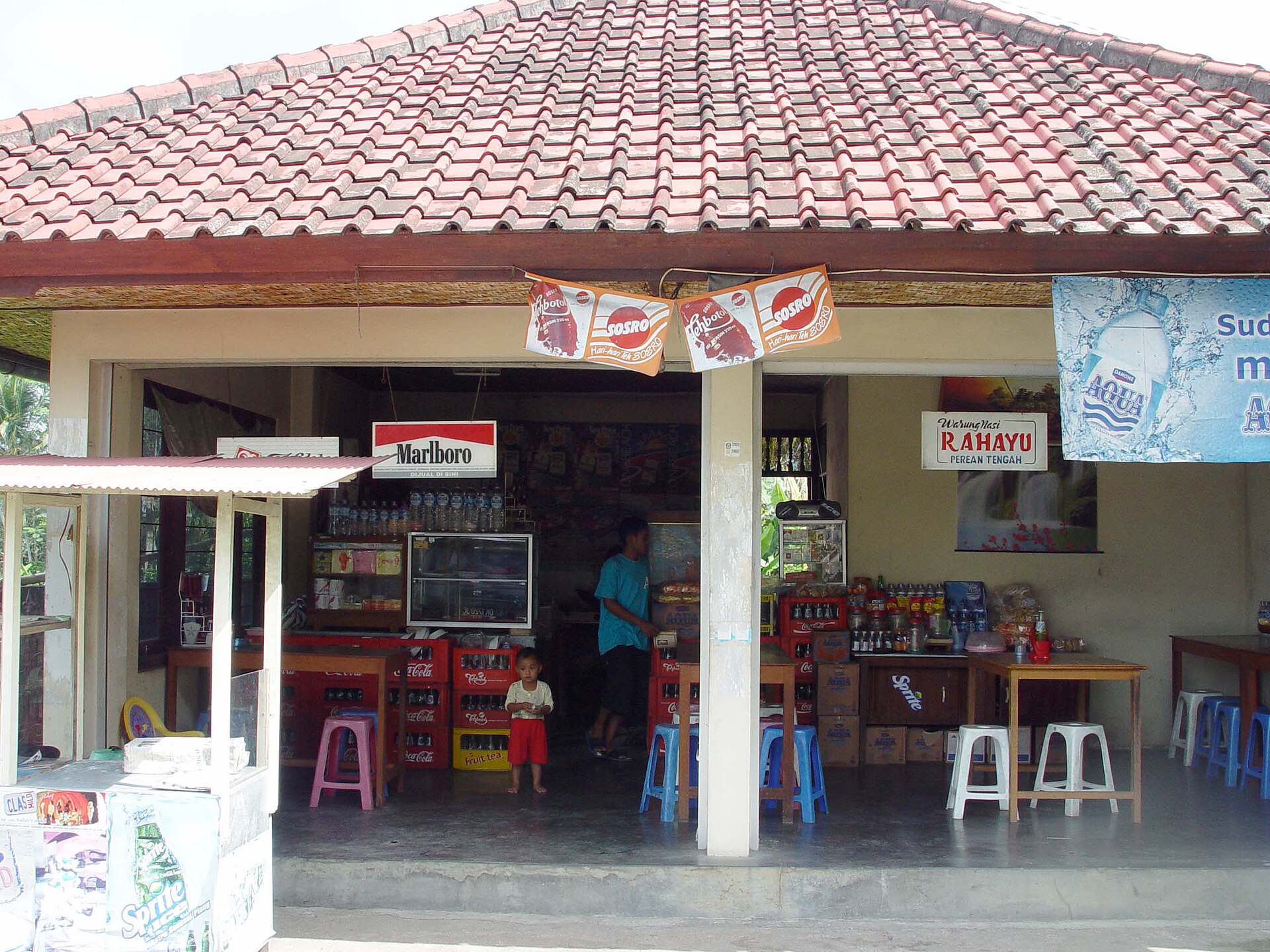
 

Warungs (Local Eateries)
The most authentic and affordable option. Look for:

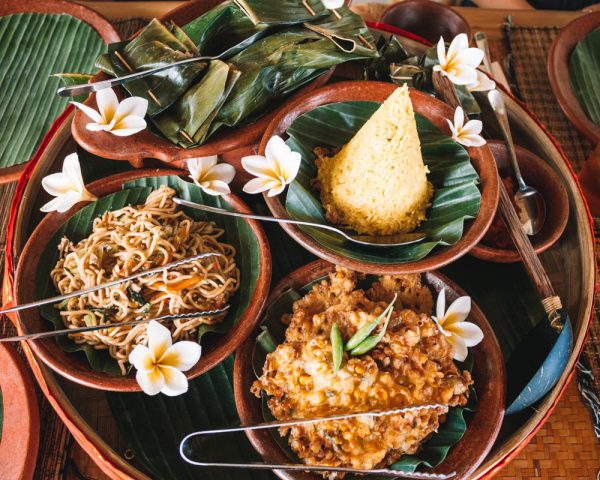
  • Gado gado: steamed vegetables, tofu, tempeh, and rice crackers with peanut sauce. Naturally vegan, but ask for no egg on top. 
  • Nasi Campur: a plate of rice with small portions of various dishes. Many warungs have a vegan version with tofu, tempeh, and vegetable curries. 
  • Mie goreng / nasi goreng: fried noodles or rice. Specify tanpa daging, tanpa telur, tanpa terasi (no meat, no egg, no shrimp paste).
  • Tempeh and tofu: Ubiquitous, cheap, and prepared dozens of ways — fried, grilled, in curries, or as satay. 

*Caveat: Balinese cooking uses terasi (shrimp paste) and fish sauce liberally. Always confirm “tanpa ferasi” if you are strict vegan. 

Vegan Cafes and Restaurants
Ubud and Canggu are the epicenters. Standouts include:

  •  Kynd Community (Seminyak): Instagram-famous smoothie bowls and plant-based comfort food. 
  • Moksa Ubud: Farm-to-table dining on a permaculture farm. 
  • Sage (Ubud): Jackfruit tacos and gluten-free desserts. 
  • Secret Spot Canggu: Plant-based breakfast, lunch, and dinner. 

Traditional Balinese Dishes that are Naturally Vegan:

  • Urap urap: steamed vegetables with spiced grated coconut. 
  • Sayur lodeh: vegetable curry in coconut milk. 
  • Pelecing kangkung: water spinach with raw sambal. 
  • Jukut undis: black-eyed pea and vegetable stew. 

Where to Find the Best Vegan Food by Region

  • Ubud: raw, healthy, spiritual. Best for yoga retreats, organic farms, and fine dining. 
  • Canggu: trendy, social, surf. Best for brunch, smoothie bowls, and casual vegan. 
  • Seminyak: chic, beachy, upscale. Best for dinner, cocktails, and Instagram moments. 
  • Sanur: quiet, local, family-friendly. Best for traditional warungs and relaxed pace. 
  • Uluwatu: cliffside, surf, boho. Best for sunset dinners and health-focused cafes. 

Tips for Eating Out

  • Learn these phrases: “saya vegan” (I am vegan) or “tanpa daging, tanpa telur, tanpa susu, tanpa terasi” (no meat, no egg, no dairy, no shrimp paste). 
  • Check for hidden animal products: some vegetable curries use chicken stock. Some sambal contains shrimp paste. Some fried rice is cooked with egg. 
  • Breakfast is the easiest meal: every cafe serves smoothie bowls, tropical fruit, and coconut-based dishes. 
  • Don’t skip the street foodmartabak (stuffed pancake) and pisang goreng (fried banana) are often vegan and delicious. 

Why Take a Vegan Cooking Class in Bali

Restaurants are only half the culinary story in Bali. A cooking class is where you learn why Balinese food works the way it does, and where you guarantee every dish you eat is 100% plant-based. 

What you get from a cooking class that you cannot get from a restaurant:

  • Guaranteed Vegan
    • No hidden shrimp paste, no chicken stock, no egg-washed noodles. The entire menu is designed for plant-based eaters. 
  • Cultural Context
    • You’ll learn about bumbu (spice pastes), the Subak irrigation system, and why rice is sacred to the goddess Dewi Sri. You will understand the food, not just consume it.
  • Market and Farm Access
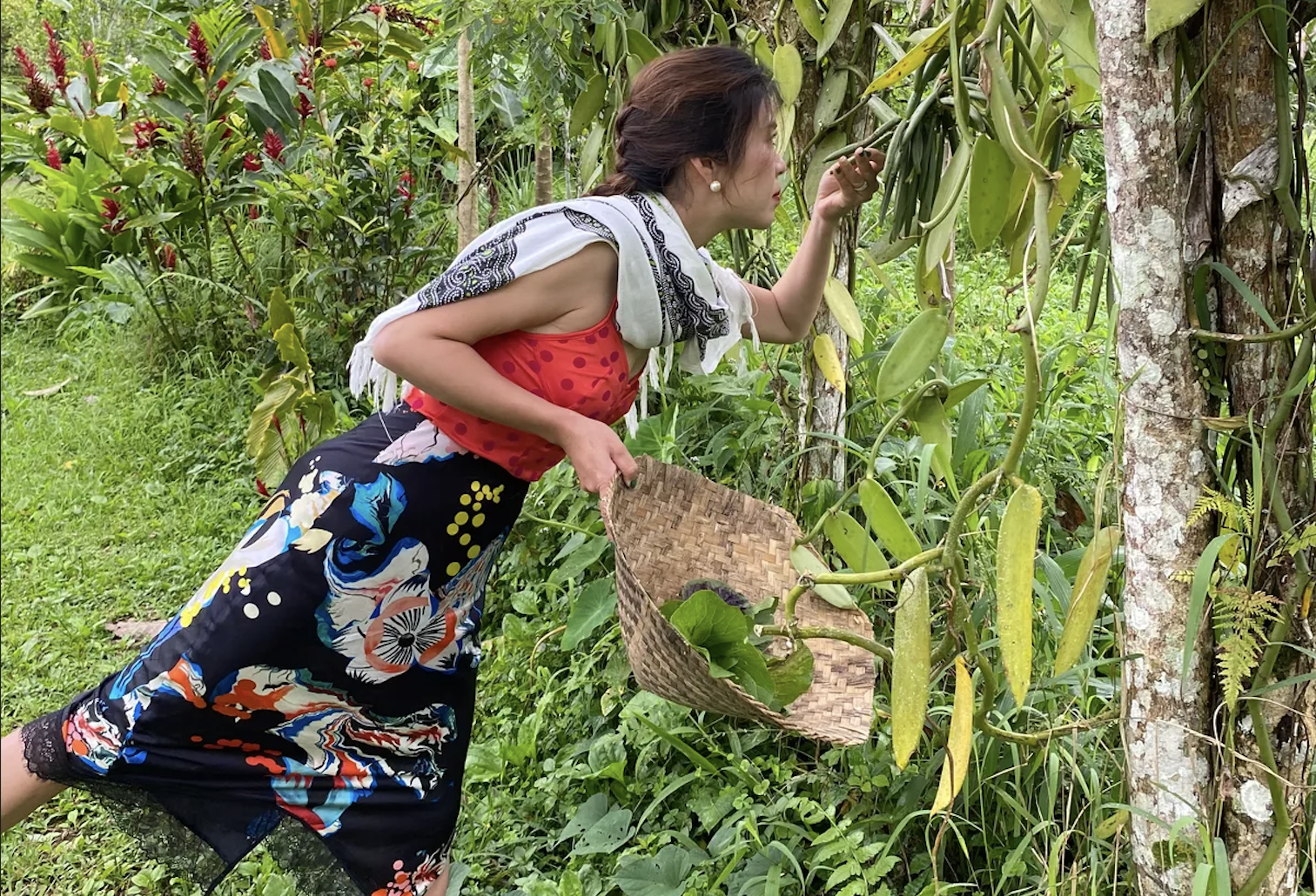
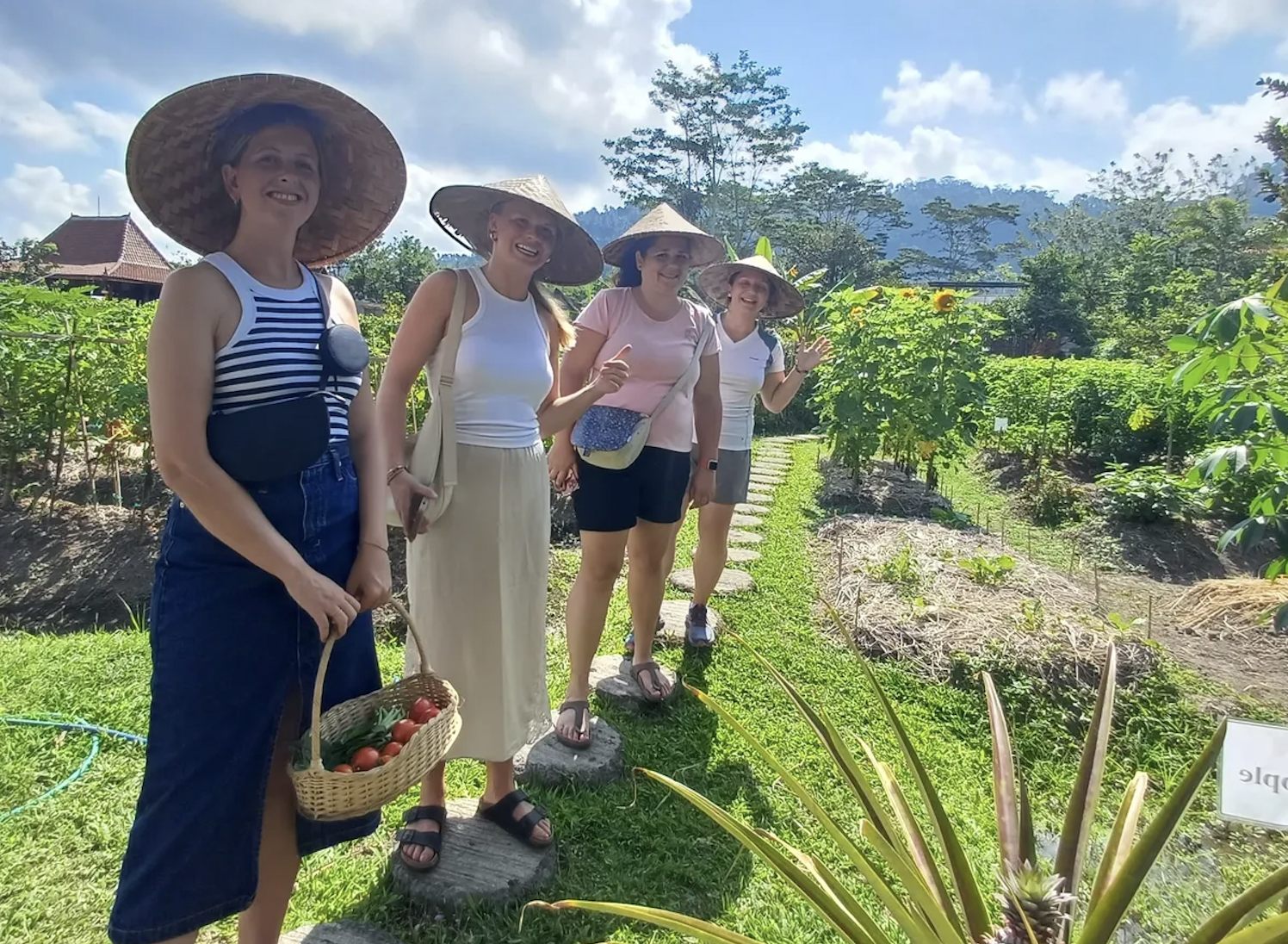
    • Many classes include tours of organic farms, rice paddies, or local markets where you see ingredients before they hit the pan. 
  • Skills to Take Home
    • You’ll learn to make bumbu genep (the foundational Balinese spice paste) from scratch. This technique can be used to recreate the paste in any kitchen, not just a Balinese one. 
  • A Guaranteed Full Meal
    • Unlike a restaurant where you order one dish at a time, many classes end with a full spread of 7-10 dishes you made yourself. 

For families specifically: a cooking class keeps children engaged for 3-5 hours, teaches them about another culture through food, and ends with a meal everyone can eat without dietary anxiety. 

What to Look for in a Vegan Cooking Class in Bali

When you conduct your search, use this checklist to make sure the class is actually vegan:

  • Is the class explicitly vegan or just “vegetarian-friendly”?
    • “Vegan” in the title means the entire curriculum is plant-based. “Vegetarian-friendly” often means meat is optional. 
  • Does it include a market tour or farm visit?
    • The best classes connect you to the source of the food.
  • How many dishes do you make?
    • 7+ dishes means a full meal and better value. 2-3 dishes means a demo, not a class. 
  • Is it hands-on or demo-heavy?
    • To understand the techniques, it’s better to actually chop, pound, and stir yourself instead of watching a teacher doing everything. 
  • Where is it located?
    • Ubud classes are dense and professional. Sidemen and Jatiluwih classes are rural and immersive. Seminyak/Canggu classes are convenient but less traditional. Of course, where your accommodations are also figures into the equation. 

The Best Vegan Classes in Bali by Region

Ubud – The Epicenter of Bali

Price:
$23 – $33 /person

Duration:
6.5 hours

Starting Times:
12:15pm

Pick Up at:
Dalem Puri Central Parking

Free Cancel:
48 hours

What we liked: This is the most reviewed vegan cooking class in Bali and still has 5.0 stars. You’ll prepare seven dishes at Taman Dukuh, an organic farm 30-40 minutes north of Ubud. The menu is entirely vegan, and the schedule includes an organic farm tour to pick vegetables, two cooking sessions with tastings, and a dessert session. Reviews praise the peaceful jungle farm setting, knowledgeable instructors, and the fact that you pick your own ingredients before cooking. A printed recipe and short video are included. 

What we didn’t like: The 6.5-hour duration is long. For families, younger children may fade by dessert. The 12:15pm start time means you’re back in Ubud around 6:45pm, which can conflict with early bedtimes. The class is very popular and may have larger groups.

Who it’s for: Families and first-timers who want a proven, high-volume experience with a full farm-to-table immersion. Best for those who can handle a long afternoon. 

Price:
$95 /person

Duration:
5.5 hours

Starting Times:
8:30am

Meeting Point:
Tresna Bali Cooking School

Free Cancel:
48 hours

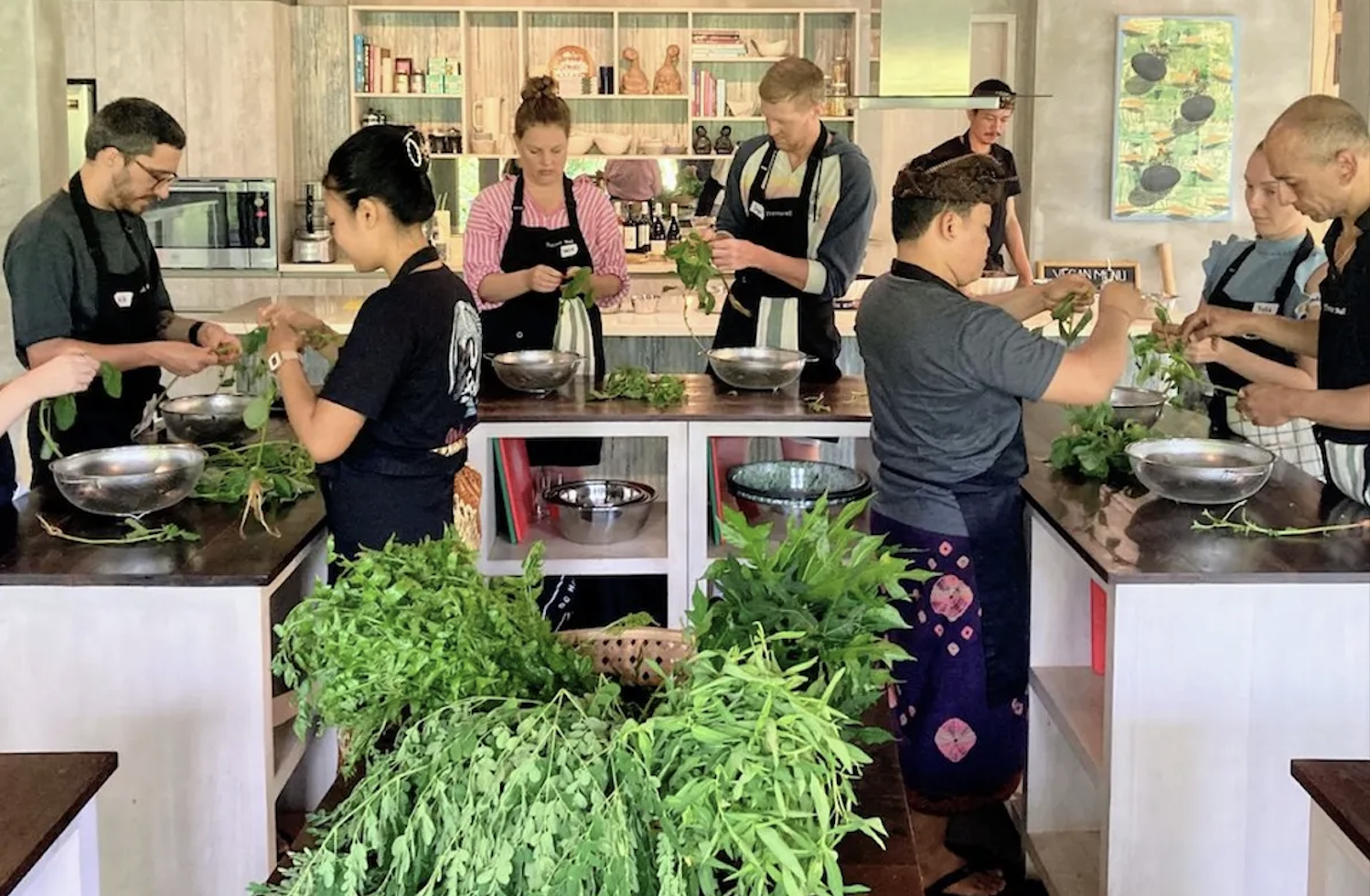
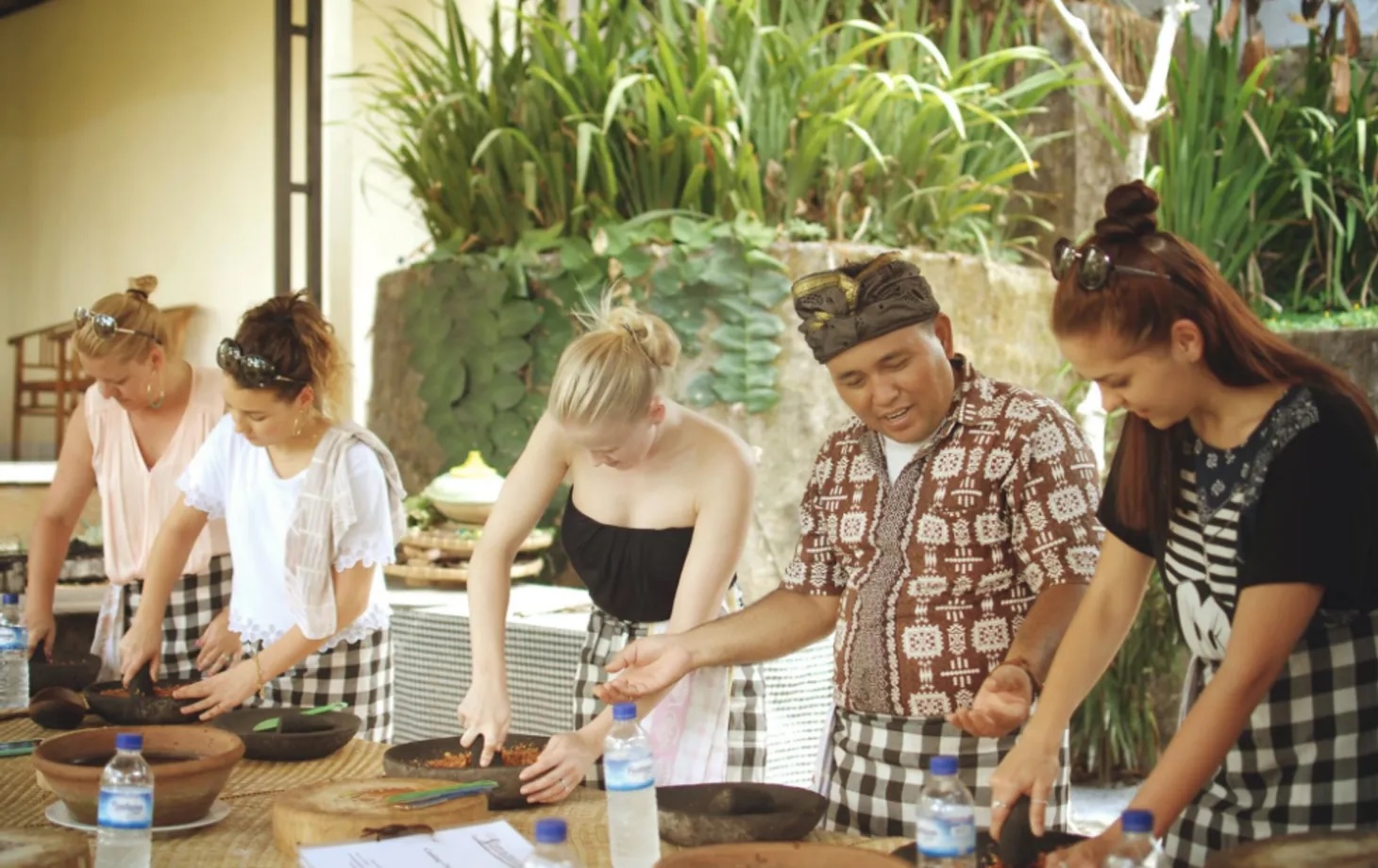
What we liked: This is the most technically rigorous vegan class in Bali. Hosted by Adi and Frances, you’ll learn 15 step-by-step recipes and cook an 8-course ceremonial lunch feast. Each participant has their own cooking station with professional chef knives and volcanic rock mortars and pestles. The class begins with an organic garden tour where you pick your herbs and spices. The hosts explain knife skills, pantry staples, and how to adapt recipes for home kitchen. Reviews praise the warmth, humor, and expertise of Adi and Frances.

What we didn’t like: The minimum age is 13 because the class is not suitable for young children. The duration and 8:30am start time make it a serious commitment. The reviews are positive but there are only 19 (compared to the previous class’s 160). The school has two small dogs that are present during class, the booking page warns: “if you’re not okay with dogs, please do not book this class.”

Who it’s for: Those who want a professional-level, fully hands-on vegan cooking education. Not suitable for families with children under 13 or anyone with dog allergies (or aversion). 

Price:
$32 /person

Duration:
4 hours

Starting Times:
8:30am, 3:00pm

Pick Up at:
You’re Ubud Hotel (free)

Free Cancel:
48 hours

What we liked: The morning session (8:30am) includes a traditional Balinese market tour before cooking. You’ll see how locals shop for fresh produce and spices. The class is completely hands-on: each student gets their own cooking station and prepares all dishes themselves. At the end of the class, you’ll receive a printed recipe booklet to take home. Reviews praise the warm, funny host, clear instructions, and the fact that the class adapts easily to vegan needs. 

What we didn’t like: The afternoon session does not include the market tour, which is a major loss. The market is half the cultural experience and is what makes this class special. The kitchen is professional but not as atmospheric as the jungle farm or riverside garden settings. 

Who it’s for: Those who want a market tour plus hands-on cooking with guaranteed recipe booklets to take home. 

Seminyak / Canggu — The Trendy Coast

Price:
$29 – $44 /person

Duration:
3.5 hours

Starting Times:
2:45pm

Meeting Point:
Kin Vegna, Kayu Aya village

Free Cancel:
48 hours

What we liked: The only evening-start vegan class on this list, making it ideal for late risers or families who want to beach in the morning and cook in the afternoon. You’ll prepare over 10 dishes in a small-group setting, and will receive a printed recipe booklet and notes. Reviews note the relaxed, welcoming vibe, knowledgeable and humorous instructors, and the fact that the class is fully hands-on. The Seminyak location is convenient for south Bali travelers. 

What we didn’t like: The “healthy” angle means less traditional bumbu depth and more general Asian-fusion influence. The class is kitchen-only, so no farm tour, no market visit, and no garden. The meeting point is at Kin Vegan inside a flea market, which can be hard to find. 

Who it’s for: Travelers staying in Seminyak, Canggu, or Kuta who want a convenient evening class without traveling to Ubud. 

Price:
$34 – $45 /person

Duration:
3 hours

Starting Times:
12:00pm, 4:00pm

Pick Up at:
Your Canggu hotel

Free Cancel:
48 hours

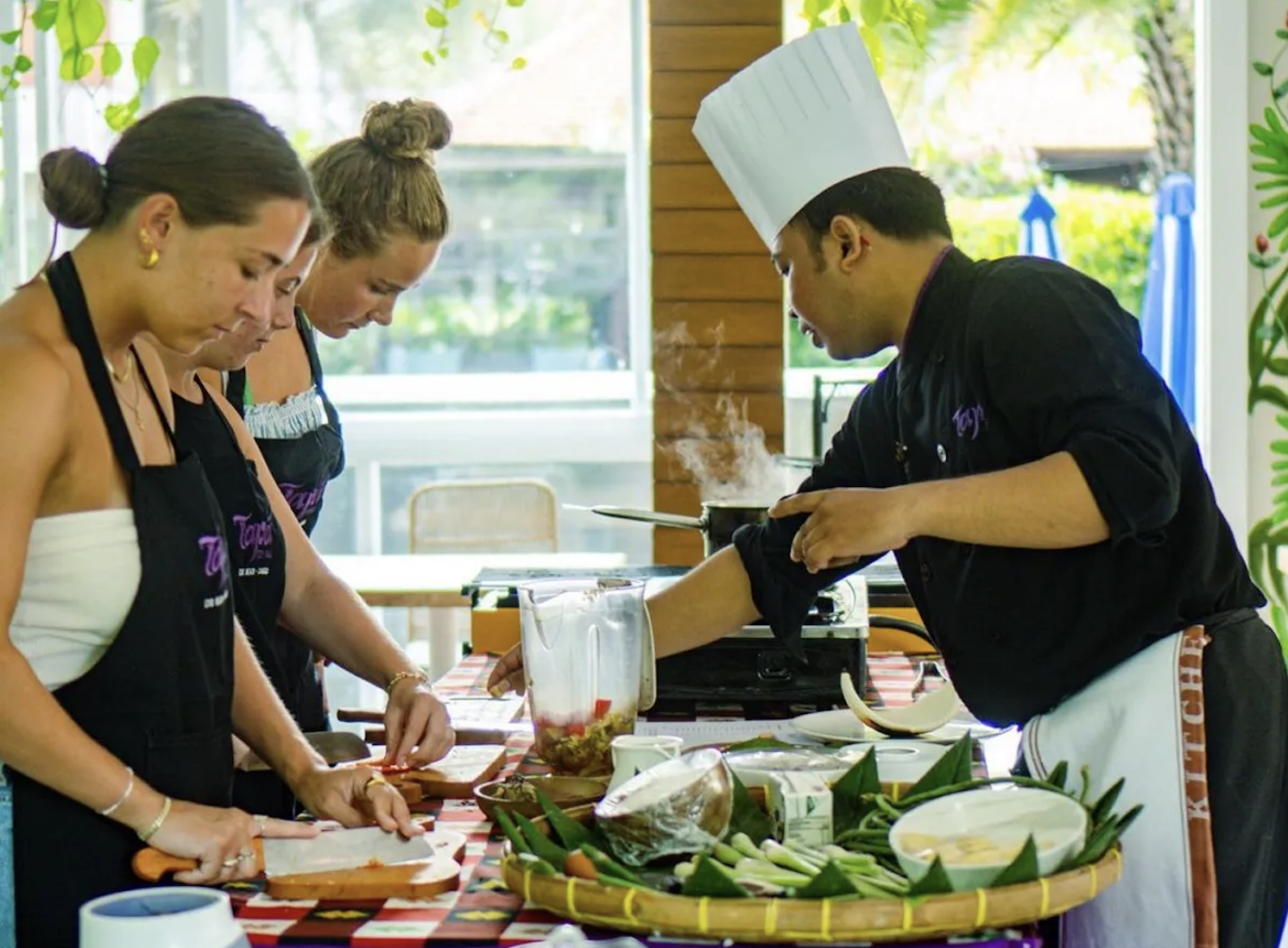
What we liked: The class offers four separate menus, including Menu III, which is the dedicated vegetarian/vegan option. The other menus include seafood and chicken options, making this class ideal for mixed groups where not everyone is vegan. The open-air kitchen is in a nice location, and the class is well-organized with printed recipes and a completion certificate. Reviews mention the friendly, patient instructors and the hands-on format. 

What we didn’t like: The vegan menu is only one of four options, so you must specifically request Menu III when booking. The other menus are the default, so vegan participants have to be proactive. The class is only 3 hours and covers 3 dishes, which is less comprehensive than the 7-15 Ubud classes. Free pick-up is limited to central Canggu; other areas incur extra fees. 

Who it’s for: Mixed groups where some members are vegan and others are not. Best for travelers who want flexibility and a shorter time commitment. 

Price:
$41 /person

Duration:
3.5 hours

Starting Times:
9:30am, 2:30pm

Meeting Point:
Anandinii Organic Garden

Free Cancel:
48 hours

What we liked: Sidemen is a recognized sacred village, not a tourist town. The class includes harvesting fresh ingredients from the family garden before cooking. The setting is a traditional Balinese compound with rice terrace views. The class title and 4-course menu leave no doubt that this class is vegan. The schedule includes a garden tour, handpicking ingredients, cooking, and dining at a vegan restaurant. 

What we didn’t like: Currently only 6 reviews, so the class isn’t as tested as others. The rural location requires a 1+ hour drive from Ubud or Canggu, and you’ll need to arrange the transportation yourself. The 3.5-hour duration is shorter than the more immersive classes, so you’ll only make 4-5 dishes.

Who it’s for: Travelers who want to escape the Ubud tourist circuit and experience real village life, and anybody who enjoys garden and farm activities. 

Price:
$32 – $53 /person

Duration:
7.5 hours

Starting Times:
7:30am

Pick up at:
Your hotel in Ubud, Canggu, and many others

Free Cancel:
48 hours

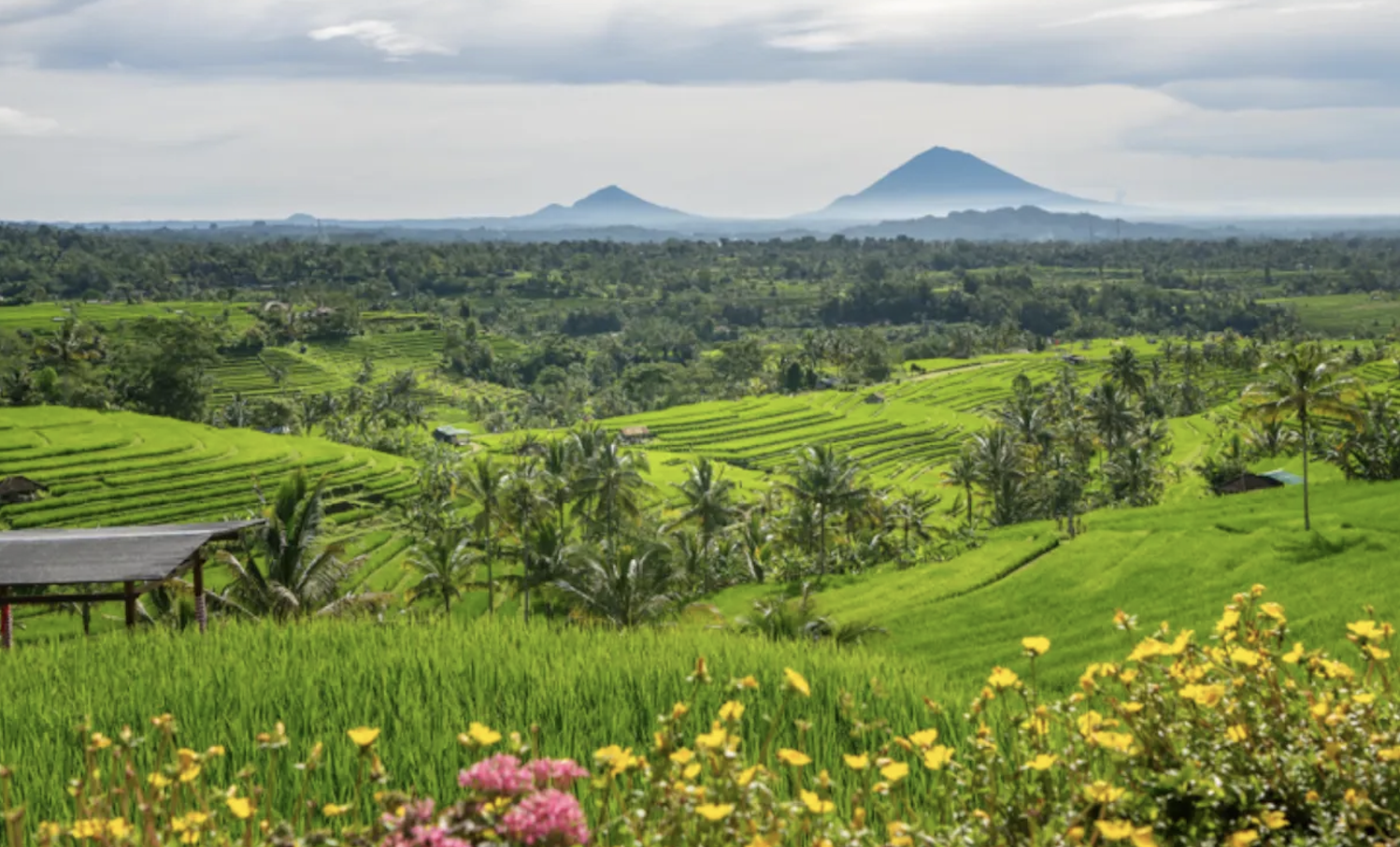
What we liked: This is the most immersive rural experience on this list. You’ll cook in a family-run organic farm surrounded by the UNESCO-listed Jatiluwih rice terraces. It’s a full, 7.5-hour day that starts with a hotel pick-up, trek to the farm, welcome drink, farm tour and vegetable picking, cooking lesson, lunch, dessert, and then an afternoon return. You’ll receive a cookbook with recipes to take home. The free pick-up includes Ubud, Canggu, Kuta, Seminyak, Legian, Jatiluwih, Tanah Lot, and Munduk. 

What we didn’t like: The start time is early and the day is long. There’s an extra charge for pick-up in Sanur, Jimbaran, Nusa Dua, and Uluwatu. 

Bottom line: Travelers who want a full-day, deeply immersive farm and food experience far from the central tourist areas. The Jatiluwih setting is unforgettable. 

The Competition: Why These Are the Only Classes We Recommend

Bali has dozens (hundreds?) of cooking classes, but most are either:

  • Not technically vegan: “vegetarian-friendly” classes that use shrimp paste, fish sauce, or egg by default. 
  • Demo-heavy: classes where you watch a chef cook rather than making the food yourself. 
  • Wellness tourism in disguise: raw food or “high-vibe” classes that teach smoothie bowls and vegan cheesecakes rather than traditional Balinese cuisine. 
  • Unreviewed: new classes with no verified feedback. 

We rejected all of these. The classes on this list are either verified vegan or easily adapted to vegan, hands-on, culturally rooted, and reviewed by Cookly and other real travelers. 

Why Cookly

Cookly has sent travelers to over 5,000 cooking classes across 150+ destinations. We only list classes that have been verified as authentic and worth our travelers’ time. Our booking team includes vegans and others with dietary restrictions, so we know the difficulty of traveling to a new place worrying about what to eat. 

Frequently Asked Questions

Is Bali really vegan-friendly?
Yes! With over 200 vegan-friendly restaurants and a Hindu culture that naturally embraces plant-based eating, Bali is one of the easiest destinations in the world for vegan travelers. 
 
Can I eat vegan at traditional Balinese warungs?
Yes, but you need to communicate clearly. Many dishes are naturally vegan, but shrimp paste (terasi) and fish sauce are common. Learn the phrase “tanpa teras” (no shrimpt paste). 
 
Are cooking classes better than restaurants for vegan travelers?

They can be. A cooking class guarantees a fully vegan meal and teaches you about the culture. Restaurants might be faster but risk hidden animal ingredients if it’s not specifically vegan.

Which region has the best vegan cooking classes?
Ubud has the most options and the highest reviews. Sidemen and Jatiluwih offer the most authentic rural immersion. Seminyak and Canggu are convenient but less traditional. 

Write a response

Leave a Reply

Close
Cookly © Copyright 2020. All rights reserved.
Close